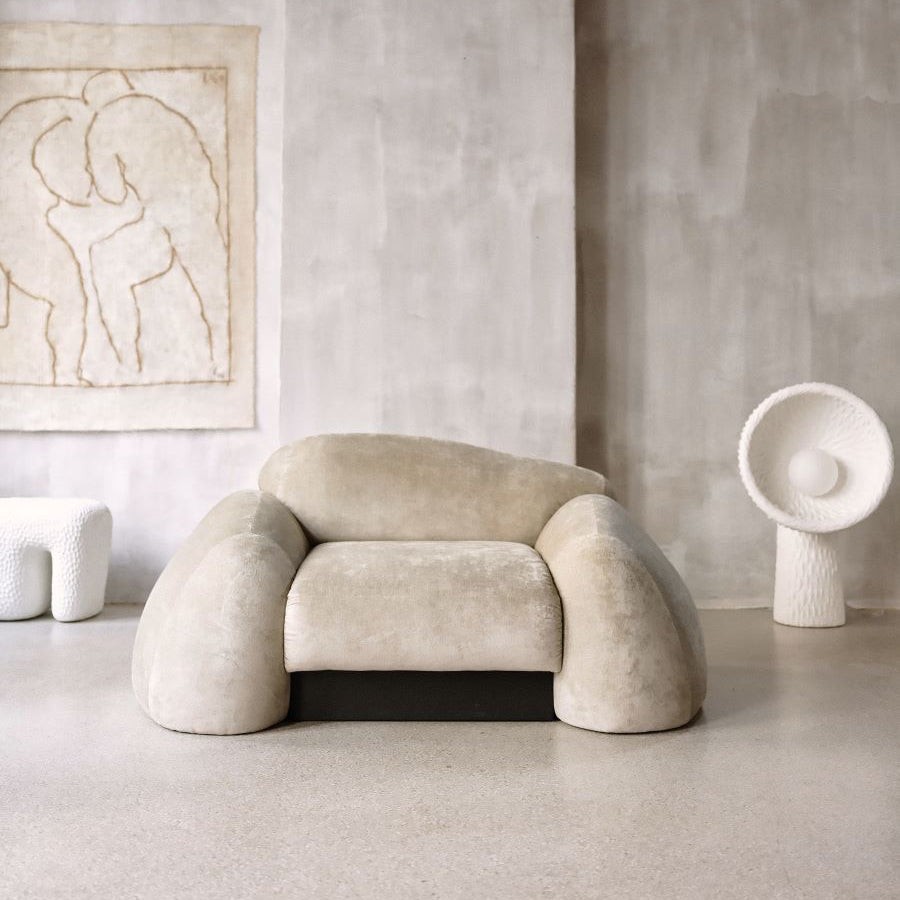
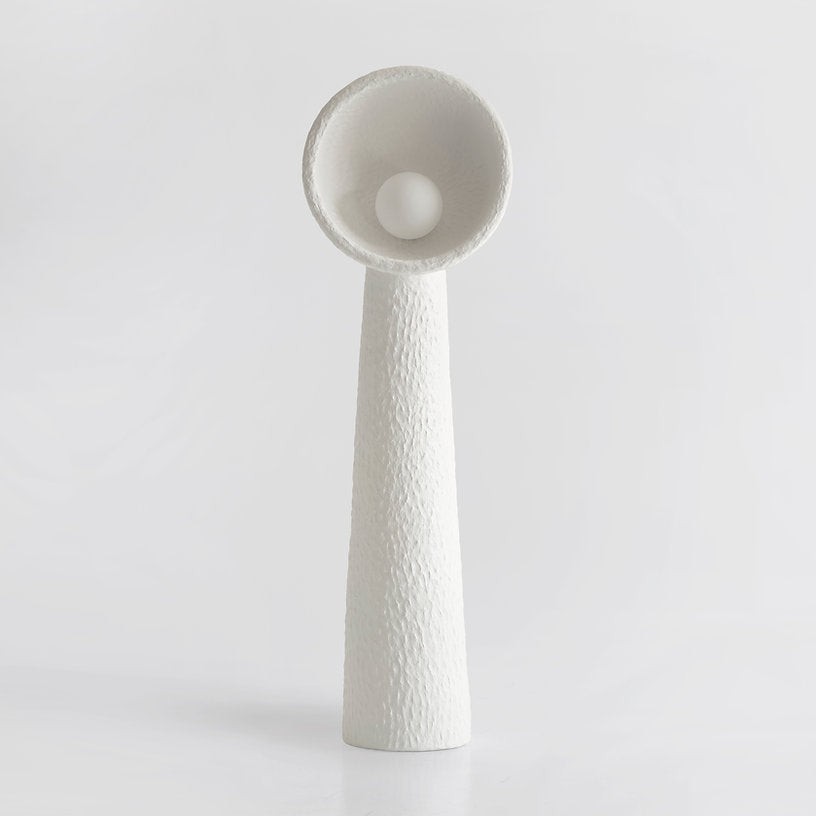
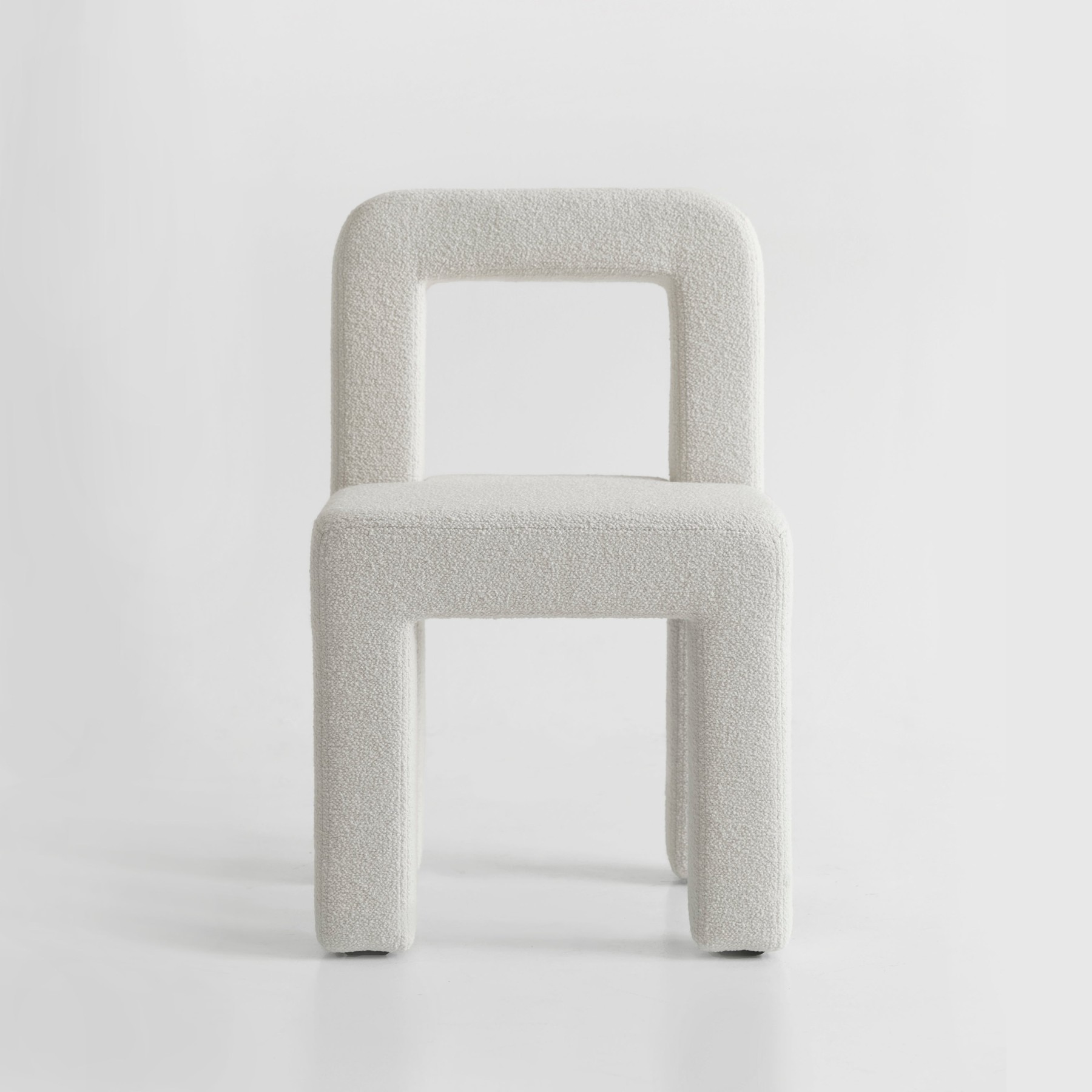
A lamp stands on a thick stem, its round face turned towards the room. Beside it, a chair rests on legs so substantial that it almost seems ready to walk. These are objects from the world of Victoria Yakusha: familiar enough to live with, unusual enough to stop you in your tracks. Look a little longer and their shapes begin to tell you where they come from. A sunflower. A willow roof. A musical instrument carried through generations.
The designer behind the forms
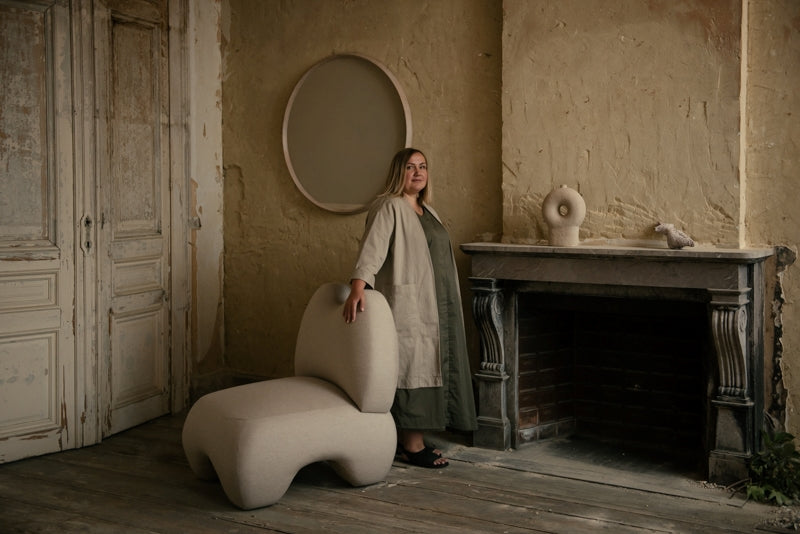
Born in Dnipro in 1982, Yakusha trained in architecture in Ukraine and France before founding her studio in 2007. The Revolution of Dignity in 2014 changed how she understood her role. That year she created FAINA, a furniture, lighting and decor brand rooted in Ukrainian cultural heritage. Since 2022, she has also worked as an individual designer with different brands. Architecture, everyday objects and collectible pieces remain connected by the same question: how can a contemporary space carry the memory of a place?
Minimalism with a pulse
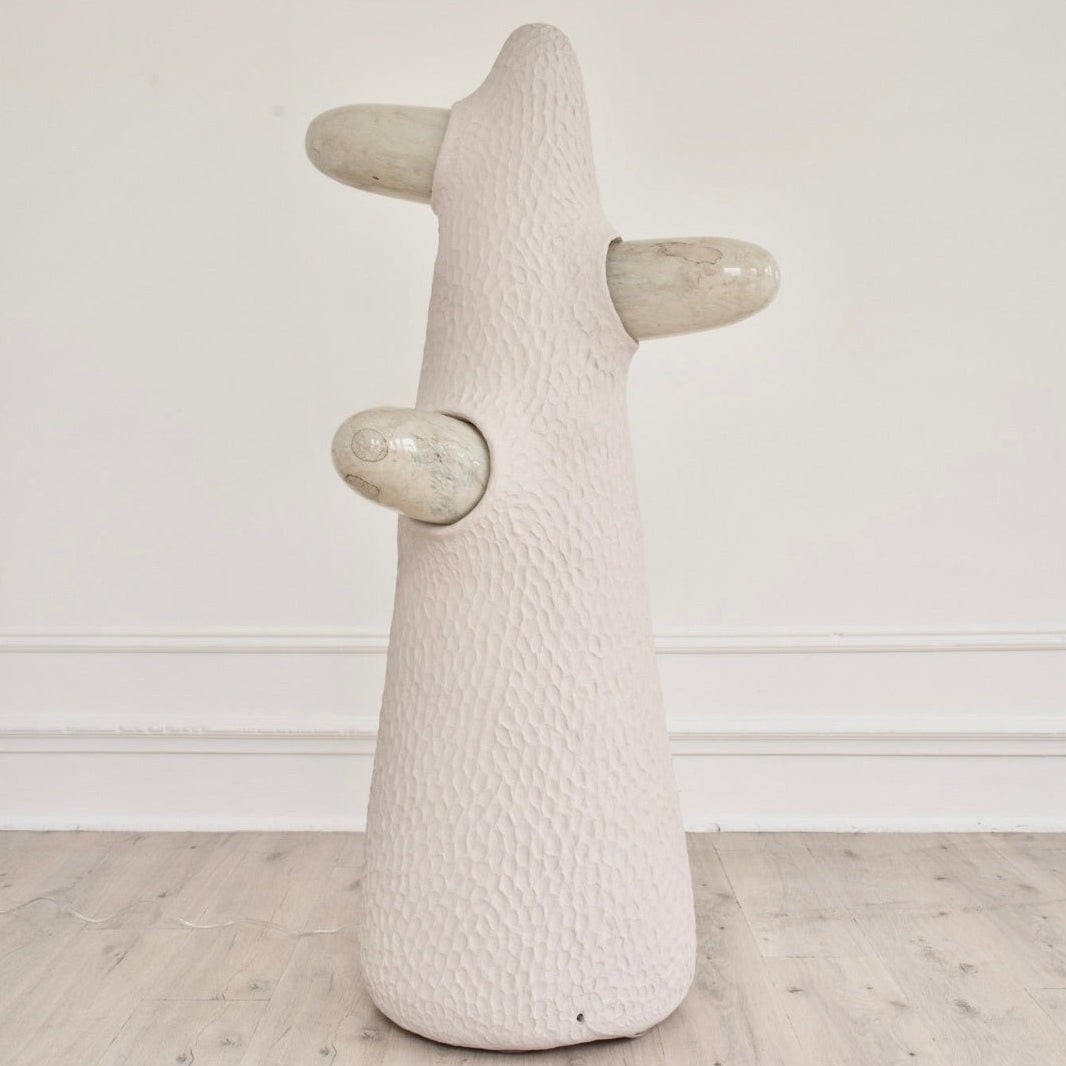
Yakusha calls her approach live minimalism. The outlines are simple, but the surfaces are anything but anonymous. Clay, wood, wool and willow vine bring texture and a sense of touch. ZTISTA, her signature material, is described by the studio as a blend of recycled paper, clay, hay and other natural components. In the SONIAH lamp it becomes a tall, sculptural sunflower. In Grun', it meets blown glass made using the Ukrainian craft of gutnitstvo, creating a lamp that looks part tree, part creature.
A roof, a river, a song
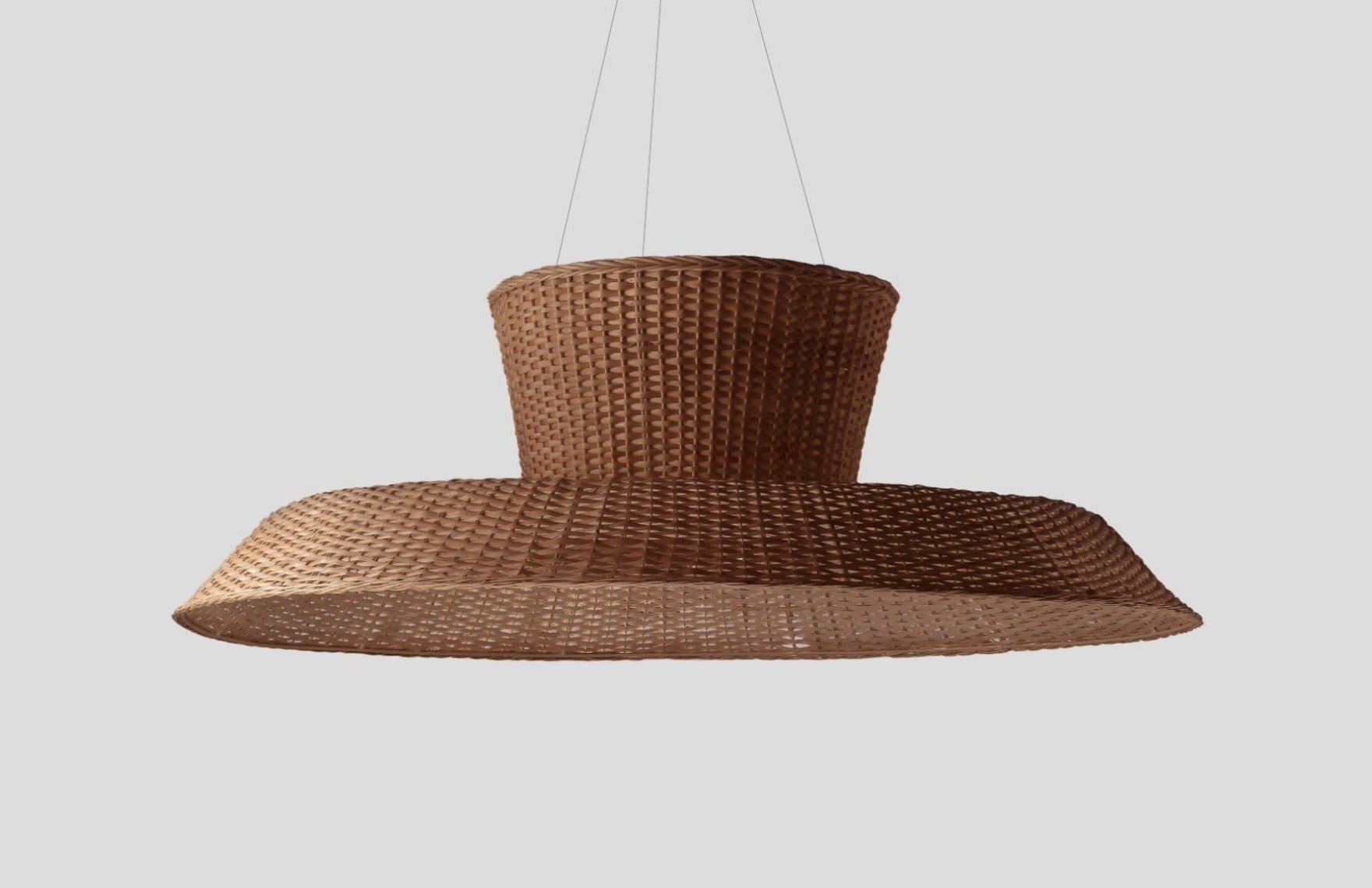
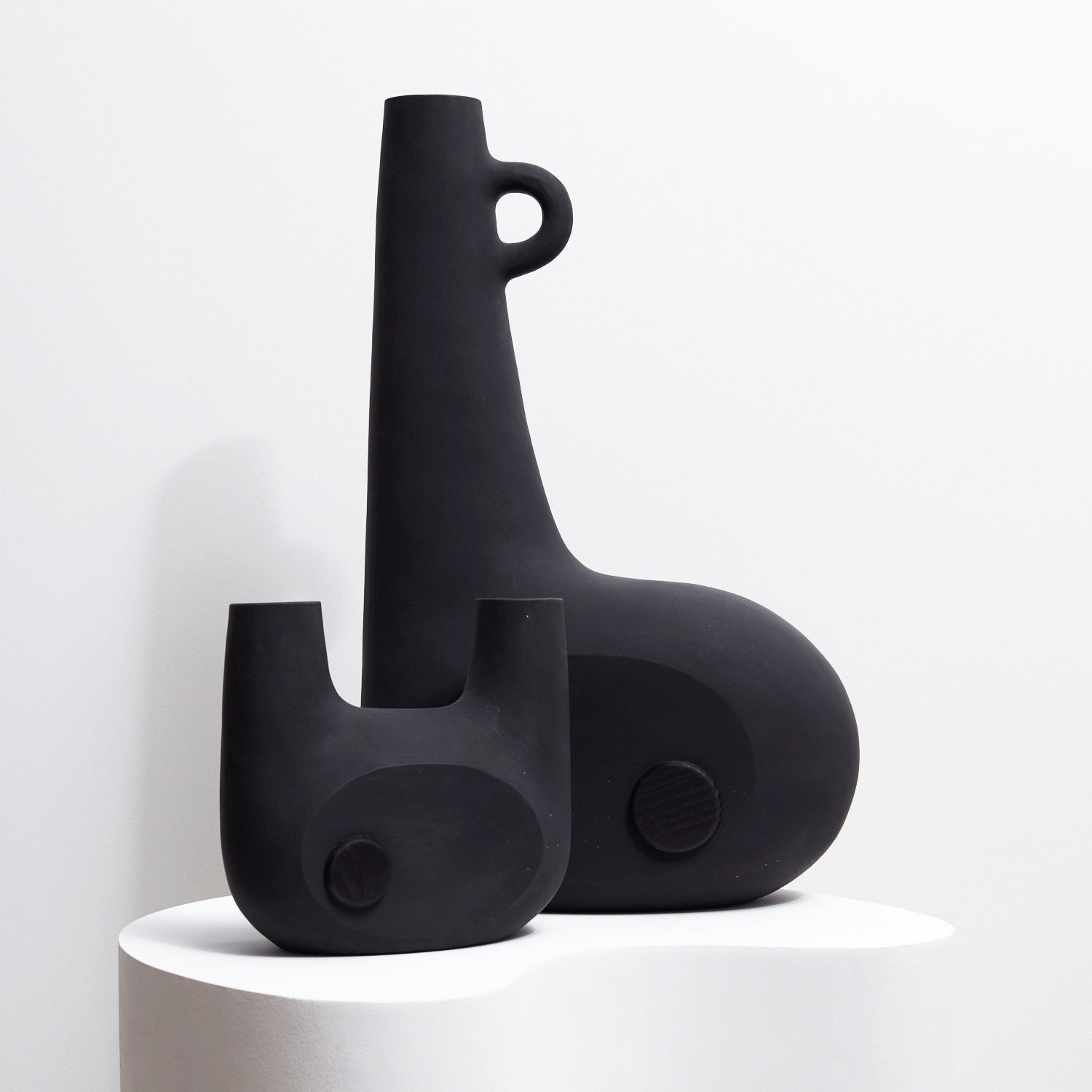
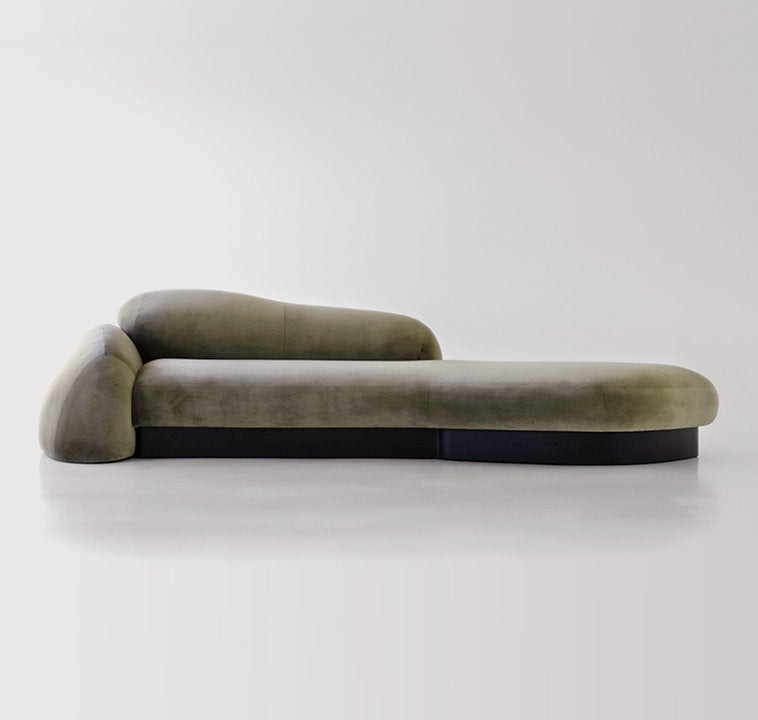
The names offer a way into the collections. STRIKHA recalls the protective roof of a Ukrainian home, yet its broad shade is handwoven from willow vine by Ukrainian artisans. PLYN means fluidity: its sofa and armchair borrow the softened outlines of stones shaped by water. BANDURA translates the silhouette of the Ukrainian stringed instrument into clay vases. None of these objects needs to illustrate an old story literally. A curve, a proportion or a woven surface is enough to carry it forward.
When an object becomes a sculpture
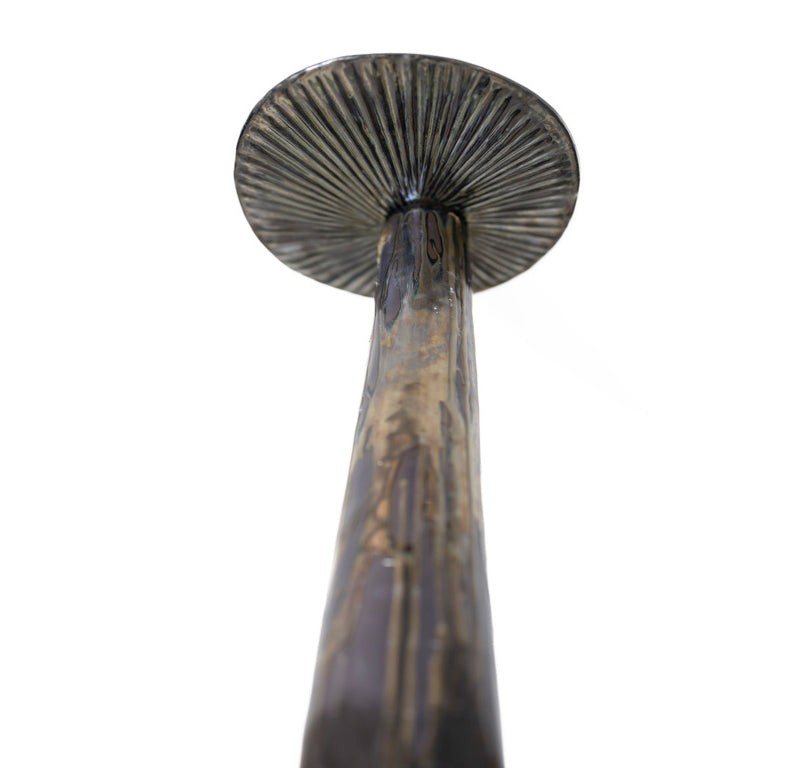
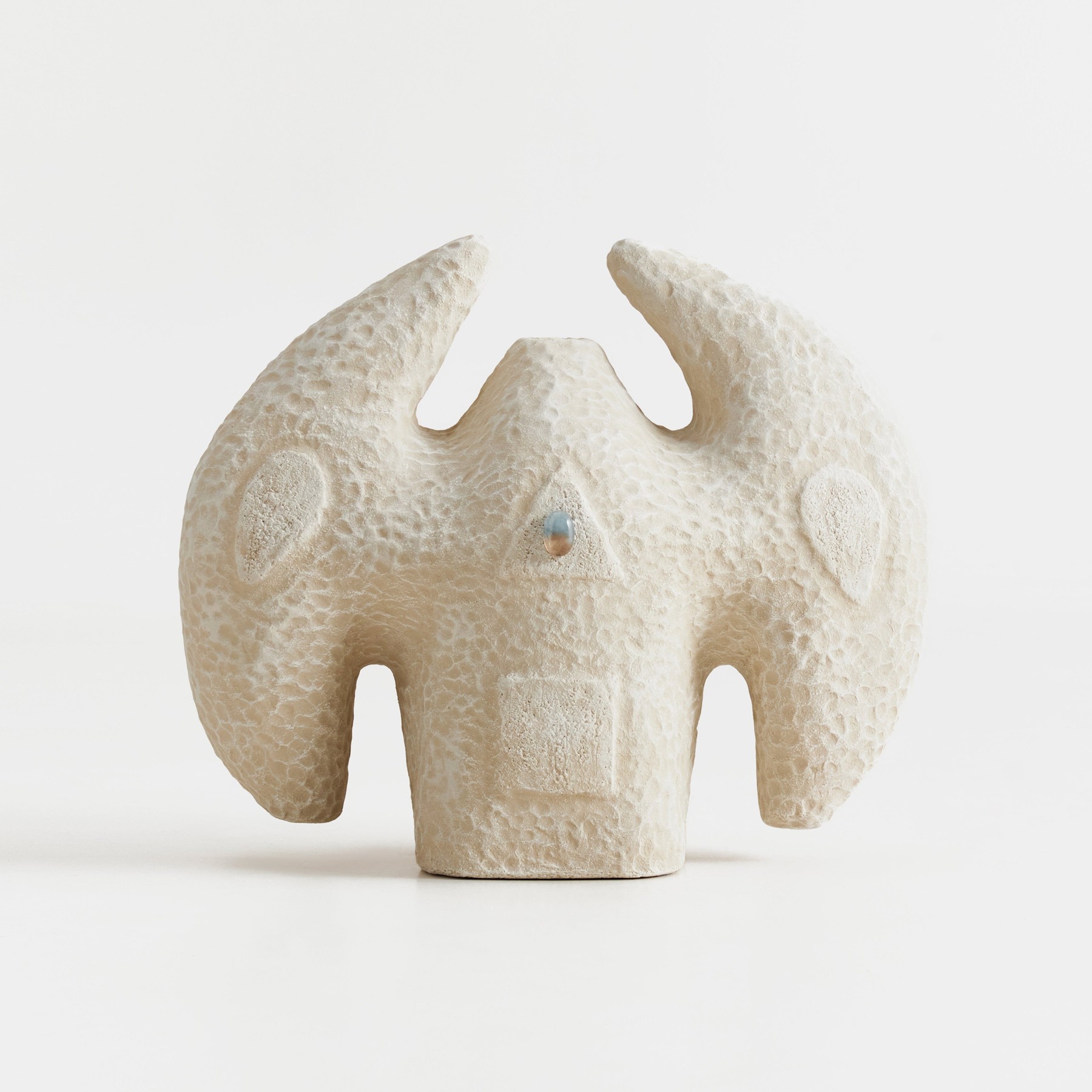
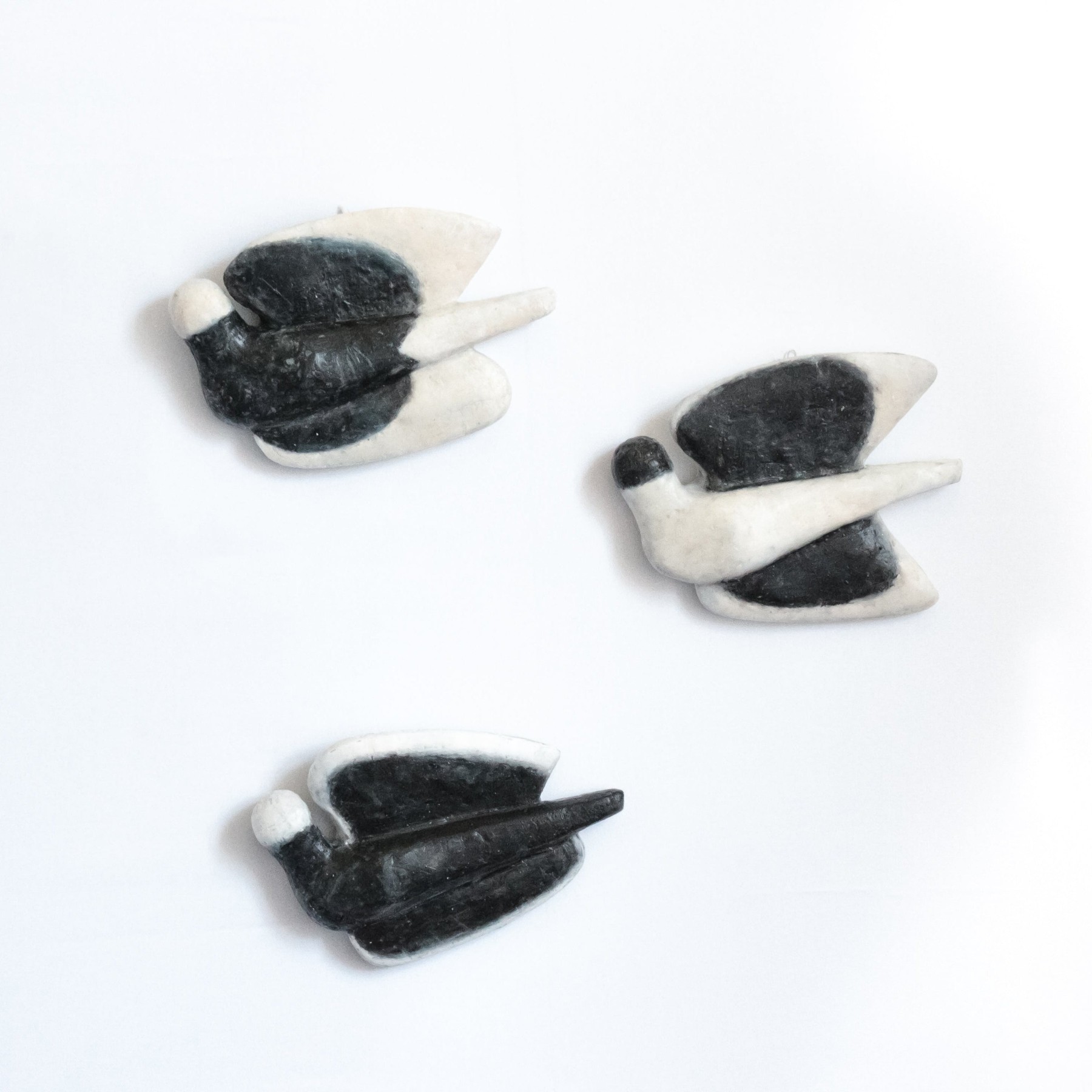
Her collectible work takes those references into a more expressive register. Smereka, made in black porcelain, draws on the trembita and the spruce trees of the Carpathians. A radiating disc crowns its slender body. The pale Tiara vase belongs to SKARB, a collection whose name means treasure. Myt' takes a quieter route: three black-and-beige paraffin birds suspended between movement and stillness. Different materials, different scales, but each asks you to look at an ordinary room a little differently.
Heritage that keeps moving
Yakusha's work extends beyond the objects. She has organised design expeditions introducing international artists to Ukrainian artisans and is involved in cultural projects including the Maria Prymachenko Museum. Her gallery opened in Antwerp in 2021, giving this design language a home beyond Ukraine. What makes the work worth discovering is not simply its unusual appearance. It is the way a familiar cultural memory can become something you sit on, switch on or keep beside you, without losing its depth.