Did you know?
Chicago’s Ukrainian Village: History and Community
Did you know that an elevated railway built along Paulina Avenue in 1895 helped Chicago’s Ukrainian Village grow by connecting residents with workplaces?
October 2, 2026 · Fact checked October 2, 2026
Key facts
- Ukrainian Village is part of Chicago’s West Town community area.
- An elevated railway built along Paulina Avenue in 1895 encouraged denser settlement.
- Three major Ukrainian churches represent Greek Catholic and Orthodox traditions.
- Cultural institutions include the Ukrainian National Museum and the Ukrainian Institute of Modern Art.
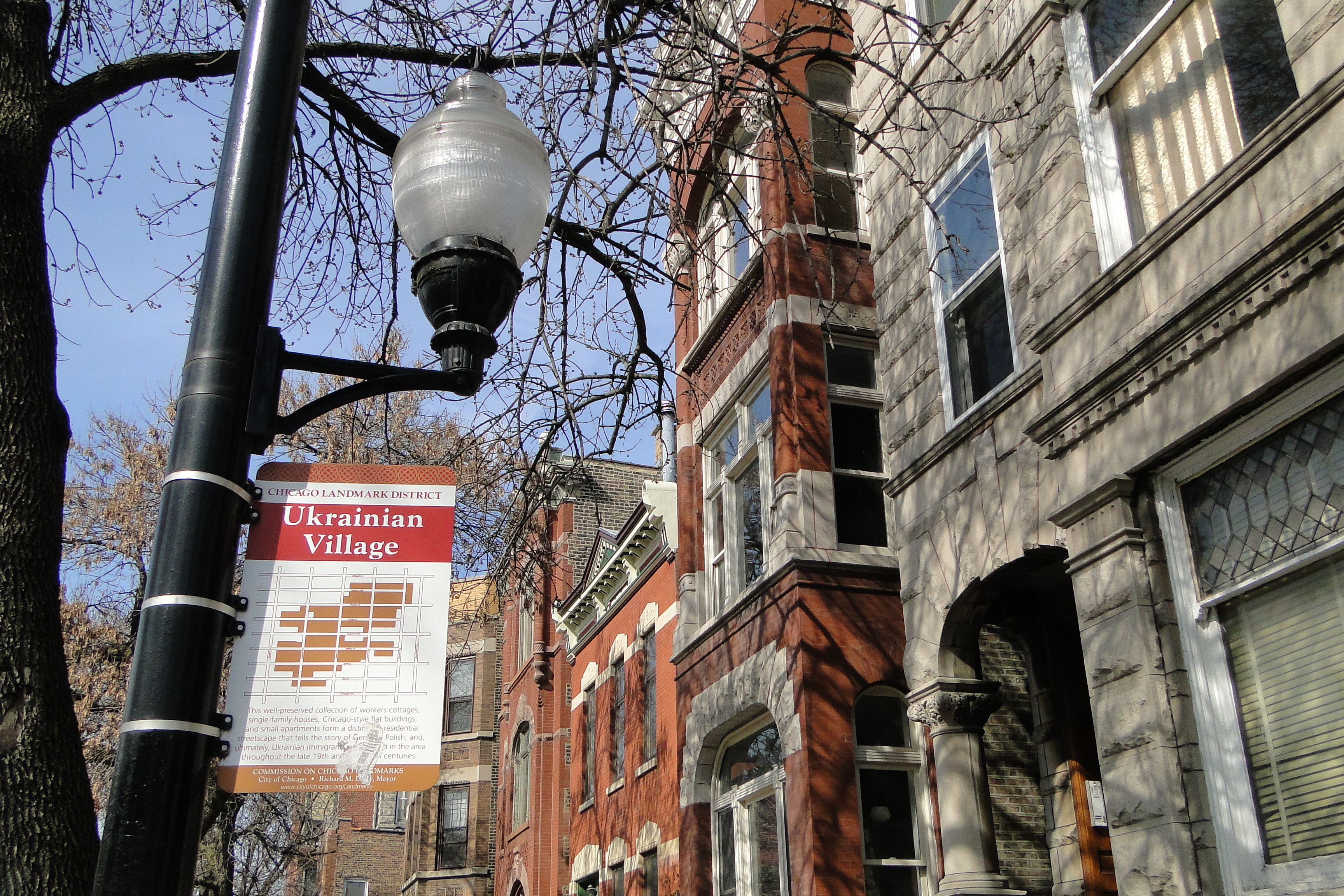
- The Ukrainian Village District received landmark designation in 2002, with extensions in 2005 and 2007.
Chicago’s Ukrainian Village is a neighborhood in the West Town community area, known for its Ukrainian churches, cultural institutions and businesses. Its importance reaches beyond the people who live within its boundaries: it is also a gathering point for a Ukrainian community spread across metropolitan Chicago. Understanding the neighborhood means looking at migration, transport, faith and the institutions that connect everyday life with cultural continuity.
Where Ukrainian Village is located
Ukrainian Village lies on Chicago’s near west side. Its usual boundaries are Division Street to the north, Grand Avenue to the south, Western Avenue to the west and Damen Avenue to the east. Some maps place the western edge farther out, at Campbell Street, so neighborhood outlines are not entirely uniform.
It is useful to distinguish three things: the neighborhood, the officially designated Ukrainian Village District and the wider Ukrainian community of greater Chicago. They are related, but they are not interchangeable. The landmark district covers particular streets and buildings within the neighborhood, while Ukrainian community life extends well beyond either boundary. The neighborhood’s churches, schools, cultural organizations and businesses help explain its broader role. The supplied neighborhood reference describes this network alongside its geography and settlement history.
How immigration and a railway shaped the neighborhood
Before dense urban settlement, the area was farmland. German immigrants became its largest ethnic group in the mid-19th century. Further immigration in the late 19th century changed the neighborhood, and by the turn of the century its population was largely Slavic.
Ukrainians settled here partly because of their familiarity with the Poles living in the surrounding Polish Downtown. The neighborhood’s Ukrainian identity therefore developed within an area already shaped by other immigrant communities, rather than in isolation.
Transport was another important part of the story. An elevated railway built along Paulina Avenue in 1895 gave residents access to workplaces and encouraged denser settlement. The line was decommissioned in 1964. Its history is a reminder that community formation depended not only on shared language or religious traditions, but also on practical connections between homes and jobs. The railway and successive waves of immigration together help explain how farmland became an established urban neighborhood.
Three Ukrainian churches with connected histories
Three major Ukrainian churches anchor the neighborhood’s religious history: St. Nicholas Ukrainian Catholic Cathedral, Sts. Volodymyr and Olha Ukrainian Catholic Church, and St. Volodymyr Ukrainian Orthodox Cathedral. Their similar names can be confusing, but they are distinct institutions with different histories.
St. Nicholas was the first of the neighborhood’s two Ukrainian Greek Catholic churches. Sts. Volodymyr and Olha parish was founded in 1968 by Patriarch Josyf Slipyj and Bishop Yaroslav Gabro. Its establishment followed a disagreement at St. Nicholas over the switch to the Gregorian calendar, with the new parish seeking to preserve Ukrainian church traditions and the Julian calendar.
From 1968 until their own church was completed in 1973, its parishioners shared facilities at St. Volodymyr Ukrainian Orthodox Cathedral. This period links the histories of the Catholic and Orthodox congregations without making them the same parish.
St. Volodymyr’s Orthodox parish was established in 1916, originally as Holy Trinity Parish. In 1946 it moved from Erie Street to Cortez Street and Oakley Boulevard. Its current building had originally served a German Lutheran congregation before being purchased and adapted for Ukrainian Orthodox use. These dates distinguish the parish’s foundation from its later move into the building, as outlined in the church histories.
Museums, education and everyday community life
Religious institutions are only part of Ukrainian Village’s community network. The neighborhood also includes the Ukrainian National Museum, the Ukrainian Institute of Modern Art and a Ukrainian Cultural Center. A Ukrainian-language grammar school and two Ukrainian youth organizations add an educational dimension.
Ukrainian-owned financial institutions, restaurants, shops and other businesses connect that cultural network with everyday needs. Together, these institutions show why the neighborhood matters as more than a place of historic architecture. Its Ukrainian identity is expressed through education, art, worship and commerce, not through any one building alone.
For someone getting to know the area, this offers several starting points. An interest in art can lead toward the Ukrainian Institute of Modern Art; an interest in community institutions can lead toward the museum, churches or local businesses. The wider Ukrainian population is dispersed across the metropolitan region, but this concentration of institutions gives Ukrainian Village a continuing community role.
Landmark protection and a changing West Town
On December 4, 2002, the Ukrainian Village District was designated a Chicago Landmark District. The designation centered on Haddon Avenue, Thomas Street and Cortez Street between Damen and Leavitt Avenues, including portions of Damen, Hoyne and Leavitt Avenues. Extensions followed in 2005 and on April 11, 2007, according to the district history.
That recognition applies to the designated district, not automatically to the whole neighborhood. Meanwhile, gentrification in West Town has been changing the area’s demographics. Ukrainian Village nevertheless remains a center of Chicago’s Ukrainian community, with a story carried by both its buildings and its institutions.
To connect with Ukrainian businesses and community services in Chicago, explore Ukrainian Pages.
Find Ukrainian businesses in
Sources and further reading
Frequently asked questions
Where is Ukrainian Village in Chicago?
It is in the West Town community area on Chicago’s near west side. Its usual boundaries are Division Street, Grand Avenue, Western Avenue and Damen Avenue, although some maps extend the western boundary to Campbell Street.
Which Ukrainian churches are in the neighborhood?
The three major Ukrainian churches are St. Nicholas Ukrainian Catholic Cathedral, Sts. Volodymyr and Olha Ukrainian Catholic Church, and St. Volodymyr Ukrainian Orthodox Cathedral.
What Ukrainian cultural institutions are there?
The neighborhood includes the Ukrainian National Museum, the Ukrainian Institute of Modern Art and a Ukrainian Cultural Center, alongside a Ukrainian-language grammar school and youth organizations.
Is all of Ukrainian Village a Chicago Landmark District?
No. The Ukrainian Village District covers a designated portion of the neighborhood. It received landmark status on December 4, 2002, and was extended in 2005 and on April 11, 2007.